Goju Ryu Karate: History And Katas Of An Age-Old Martial Art
Contents
- The Origin Of Goju Ryu (Hard Soft Style)
- Why Goju Ryu Is Different
- Goju Ryu Karate Katas: Techniques To Learn In This Discipline
- 1. Saifa
- 2. Gekisai Dai Ichi
- 3. Gekisai Dai Ni
- 4. Seiyunchin
- 5. Shisochin
- 6. Sanseru
- 7. Seipai
- 8. Kururunfa
- 9. Seisan
- 10. Suparinpei
- 11. Sanchin
- 12. Tensho
- Why Learn Goju Ryu?
- Robert Whittaker
- Giga Chikadze
- Gunnar Nelson
- Watch This!
- Frequently Asked Questions
- How long does it take to get a black belt in Goju Ryu karate?
- Does Goju Ryu karate use weapons?
- Is Goju Ryu karate Japanese?
- Conclusion
- Sources
Goju Ryu is one of the main traditional styles of Okinawan karate, and its influence is everywhere. It blends go (hard) and ju (soft) techniques and remains true to the founding principles that set it apart from other karate styles.
In fact…
Goju Ryu has a compact curriculum of 12 core kata, so it emphasizes understanding each kata deeply rather than learning many. It also favors close-range fighting, with strikes, grabs, sweeps and throws.
Have we convinced you that you should consider it? Here are more facts.
The Origin Of Goju Ryu (Hard Soft Style)
The history of Goju Ryu karate takes us to Naha, Okinawa. In 1866, Kanryo Higaonna traveled to Fuzhou in southern China, where he trained for about 13 years under Master Ryu Ryu Ko, a teacher associated with Crane-style kung fu.
When he returned to Okinawa, he combined what he learned in China with local Okinawan fighting methods, a style that became known as Naha-te. One of his students was Chojun Miyagi, who trained with him from 1902 until Higaonna's death in 1915.
The name came later. In 1930, Miyagi's top student was asked in Japan what style he practiced, and he couldn't answer because Naha-te had no formal name.
He reportedly improvised the name "hanko-ryu" (half-hard style). When he told Miyagi, Miyagi chose the name Goju-Ryu, meaning "hard-soft style."
Why Goju Ryu Is Different
Goju Ryu means "hard-soft style." The hard side includes closed-hand strikes and strong blocks, while the soft side includes open-hand techniques, circular blocks and redirecting an attack.
Chojun Miyagi built the style from his training in Okinawa and his own trips to China.
The idea was to find a balance between hardness and softness such that as you defend and block, you can relax and breathe in.
On the other hand, as you attack, your body maintains a hardness that doesn't prevent you from exhaling. The breathing techniques you find in Goju Ryu borrow from Shaolin disciplines, and emphasize that how you breathe affects your performance and how you control your body. Consequently, meditation and breathing techniques are part of this karate discipline.
Goju Ryu karate focuses on short-range combat.
Thus, no high kicks with a lot of spin-jumping like in other disciplines. Instead, short-range striking and blocking makes Goju Ryu karate effective.
It differs from Shotokan karate, which favors longer stances and longer-range techniques, while Goju Ryu relies on strikes, grabs and sweeps at close range.
Its close-range focus is useful for self-defense, since real attacks usually happen within arm's reach. Goju Ryu is often described as one of the karate styles with the strongest Chinese influence.
Goju Ryu Karate Katas: Techniques To Learn In This Discipline
If you're new to Goju Ryu, you might be wondering what kata is all about. Well, it’s a combination of prearranged movements and techniques that form the core of this Okinawan style.
All katas have Japanese names, so the vocabularies below are part of the many words to learn. You train in all 12 cores depending on your dojo (school).
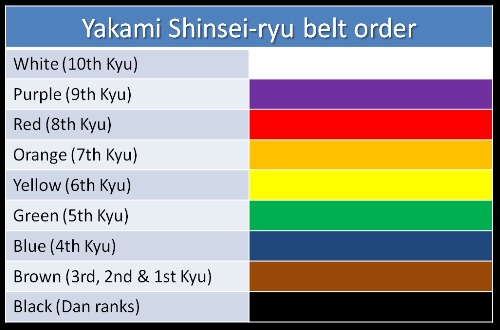
Belt systems vary by dojo, since Okinawan karate has no universal belt system. Many schools use a series of kyu grades with colored belts, starting with white.
The 1st KYU is the last one before you attain the black belt. After KYU, you enter another grading system that starts with the 1st Dan until you reach the 10th Dan of black belts. You'll discover all that later when you begin your training in Goju Ryu. For now, here are the 12 cores:
1. Saifa
Saifa is one of the kata that came from China. Its name is often translated as "rip and tear apart." It involves backfist strikes and hammerfists, among other techniques.
2. Gekisai Dai Ichi
Its name means "attack and destroy." Miyagi created the two Gekisai kata in 1940 as training forms for students, and they are usually among the first kata taught. Dai Ichi uses closed-hand techniques, while Dai Ni adds open-hand techniques and new stances.
3. Gekisai Dai Ni
So this is the number two technique while the one above is number one. It also engages in attacking and destroying movements.
4. Seiyunchin
This technique empowers you to control, attack, and conquer. Hence, it has numerous takedowns, strikes, and grapples.
5. Shisochin
This word is telling you to destroy your opponent in four directions. Therefore, it has a series of attacks in circular movements.
6. Sanseru
It translates to 36 hands and incorporates blocking sequences and kicks.
7. Seipai
This word translates to 18 hand movements, including punching, blocking, and hammerfists for close and long-range combats.
8. Kururunfa
It is often translated as "holding ground" or "hold your ground and strike suddenly." It teaches patience, staying calm before exploding with strikes and takedowns.
9. Seisan
It means 13 hands and includes defense and attack techniques. Versions of Seisan are also found in other karate styles.
10. Suparinpei
It means 108 hands. Suparinpei borrows most of its movements from the crane technique.
11. Sanchin
This Goju Ryu core teaches foundational movement techniques, breathing, and power. Sanchin is the foundation of body conditioning. The more you train in it, the better you are in other katas. Some dojos teach it as one kata while other schools separate it into two katas.
12. Tensho
Its name means "turning palms." Miyagi developed it, and like Sanchin it is performed slowly with controlled breathing, combining hard and soft motion with circular hand movements.
Why Learn Goju Ryu?
You learn strikes, blocks, grabs, sweeps and takedowns. As Goju Ryu prepares you for self-defense, it also builds conditioning and mental toughness. Check out the following Goju Ryu fighters for inspiration.
Robert Whittaker
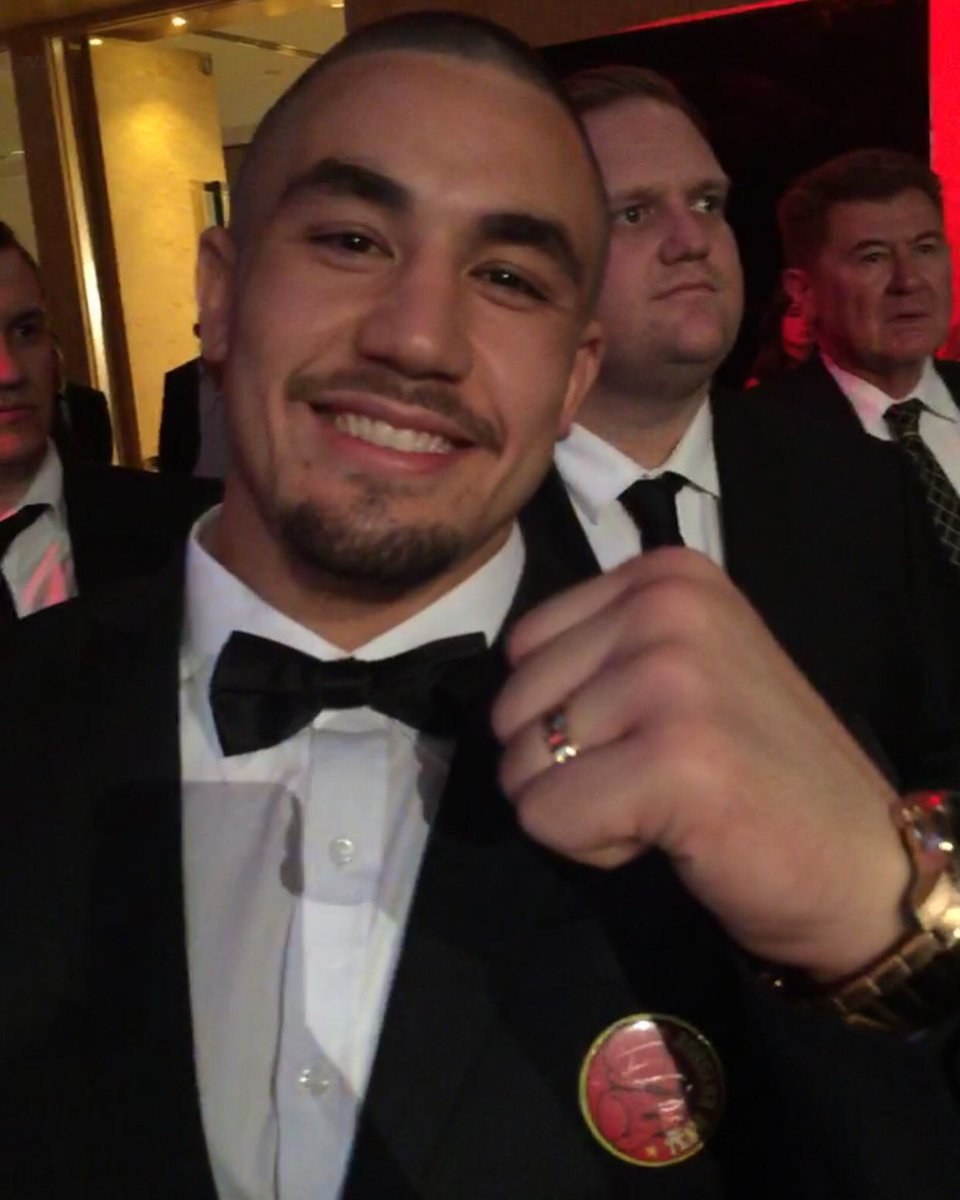
Photo by Realistkilla, CC0, via Wikimedia Commons
We can refer to him as the face of this karate style in the UFC because he is a former middleweight champion.
He trained in Goju Ryu karate as a boy after his father enrolled him to build confidence and discipline, and he earned a black belt before moving on to hapkido and MMA.
Giga Chikadze
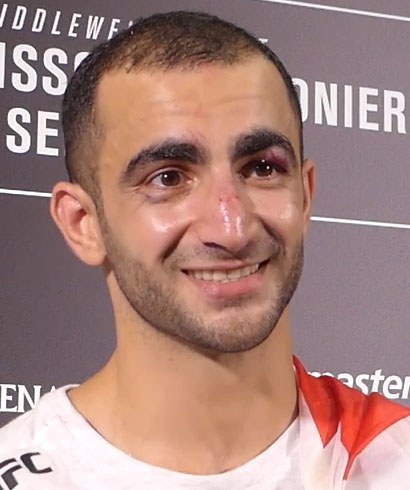
Photo by MMAnytt, CC BY 3.0, via Wikimedia Commons
Chikadze started karate as a young child in Georgia and went on to a successful kickboxing career before joining the UFC. His karate roots show in his kicking game.
Gunnar Nelson
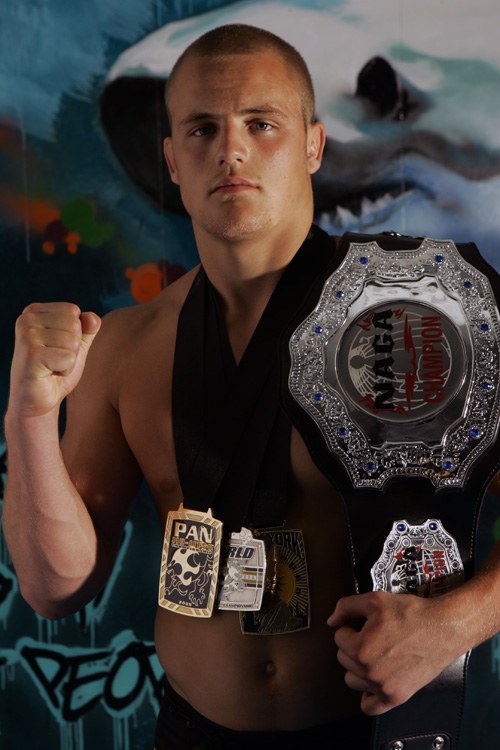
Photo by Haraldur Dean Nelson, CC BY-SA 3.0, via Wikimedia Commons
This welterweight trained in Goju Ryu karate as a teenager in Iceland and won national titles before switching his focus to Brazilian Jiu-jitsu, where he earned a black belt.
Learning Goju Ryu karate is a click away as you’ll find many videos demonstrating different techniques. For instance, this short one starts with a warm-up followed by techniques.
Knock-Out Point: Learn about the other schools of thought on Karate by proceeding here -- Shotokan Vs Kyokushin.
Watch This!
Frequently Asked Questions
How long does it take to get a black belt in Goju Ryu karate?
Every Goju Ryu practitioner takes a different duration depending on how much effort they put into training and the dojo(school) they join.
However, many people take around four to six years of consistent training, similar to other karate styles. Even as you train towards the highest rank, focus on improving your skills rather than just acquiring a black belt.
Does Goju Ryu karate use weapons?
Goju Ryu itself is an empty-hand style that trains you to use your body as your weapons. Some dojos also teach Okinawan weapons (kobudo) as a separate discipline.
Is Goju Ryu karate Japanese?
It's Okinawan. Okinawa is part of Japan today, and Goju Ryu was founded there by Chojun Miyagi, building on what his teacher Kanryo Higaonna learned in China.
Conclusion
There are numerous martial arts styles, but karate, kung fu, judo, and Jiu-jitsu are more popular. There are variations in those popular styles, such as Goju Ryu derived from Karate.
Its combination of hard and soft styles makes Goju Ryu good for self-defense or competition mode as a martial arts fighter. On top of that, it has only 12 core kata. How long do you think it'll take you to learn them?
Sources
- Goju-Ryu Karate History, Goju Karate International
- Kata of GoJu Ryu, Houston Karate