Types Of Martial Arts: 13 Popular Forms of Combat Fighting
Contents
- 13 Different Types Of Martial Arts
- 1. Aikido
- Watch This!
- 2. Brazilian Jiu Jitsu
- 3. Capoeira
- Watch This!
- 4. Judo
- 5. Kendo
- 6. Krav Maga
- Watch This!
- 7. Kung Fu
- 8. Karate
- 9. Mixed Martial Arts
- 10. Muay Thai
- 11. Sumo
- 12. Tae kwon do
- 13. Tai Chi
- Frequently Asked Questions
- What is the first martial art in the world?
- What are the deadliest martial arts?
- Conclusion
- Sources
Martial arts training can build self-confidence and teach the basics of self-defense. It is also a full-body workout that can improve agility, strength, and flexibility.
There are many styles to choose from, so here is a walk through 13 of the most popular.
13 Different Types Of Martial Arts
There is no single best style. The right one depends on your goals: sport competition, self-defense, fitness, or tradition.
Here is a quick list of martial arts worth knowing.
1. Aikido
A type of modern Japanese martial art, Aikido is a comprehensive system that includes a combination of joint locking, throwing, pinning, and striking techniques.
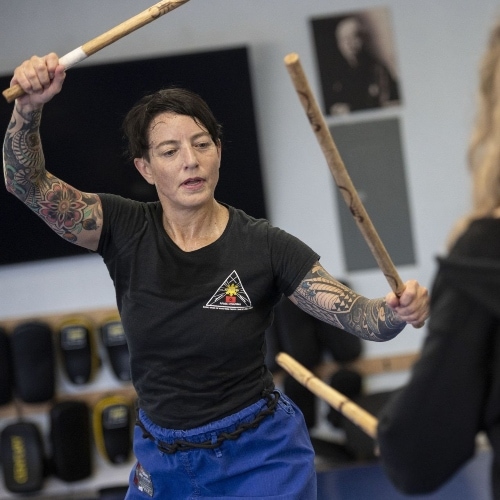
Many aikido schools also train with traditional wooden weapons, such as a practice sword, knife, or staff.
Aikido differs from most styles because it redirects an attacker's force instead of meeting it head on. The goal is to control the attack while limiting harm to the attacker.
Watch This!
2. Brazilian Jiu Jitsu
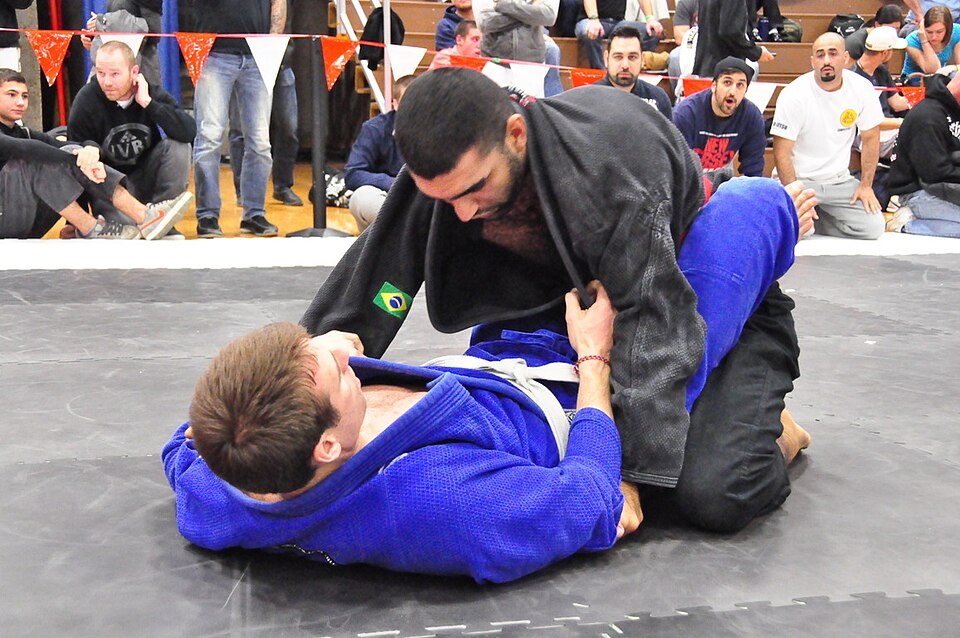
Photo by MartialArtsNomad.com, CC BY 2.0, via Wikimedia Commons
Brazilian Jiu Jitsu
Brazilian jiu jitsu grew out of the Japanese judo and jujutsu that Japanese instructors brought to Brazil in the early 1900s.
Jujutsu is often translated as "the gentle art." The name refers to using leverage and technique instead of strength, not to a lack of contact.
The central theme of this grappling art is controlling your opponent until he or she submits. Much of the fighting happens on the ground, where a smaller person can use leverage to control a bigger one.
Fun Fact: If you are interested in knowing more about this fighting style, then research Muay Thai vs BJJ for a comparative review.
3. Capoeira
Capoeira is more than just a martial art. It is an Afro-Brazilian cultural practice that combines singing and dancing with fighting.
In capoeira, players will form a circle, and in the center, two players will fight. Meanwhile, the people around the circle will clap, chant, sing, and play instruments.
More than being an artistic fighting style, capoeira is also about showing mutual respect between participants. Plus, it is a great form of social integration since it is a group activity.
Watch This!
4. Judo
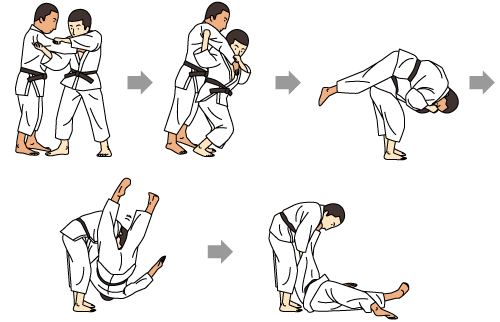
Judo
Jigoro Kano created judo in Japan in 1882, according to the International Judo Federation's history. He built it from older jujutsu systems used by feudal and samurai warriors, removing the most dangerous techniques.
Judo means "the gentle way" in English. It focuses on throws, pins, and other grappling techniques to control the opponent.
5. Kendo
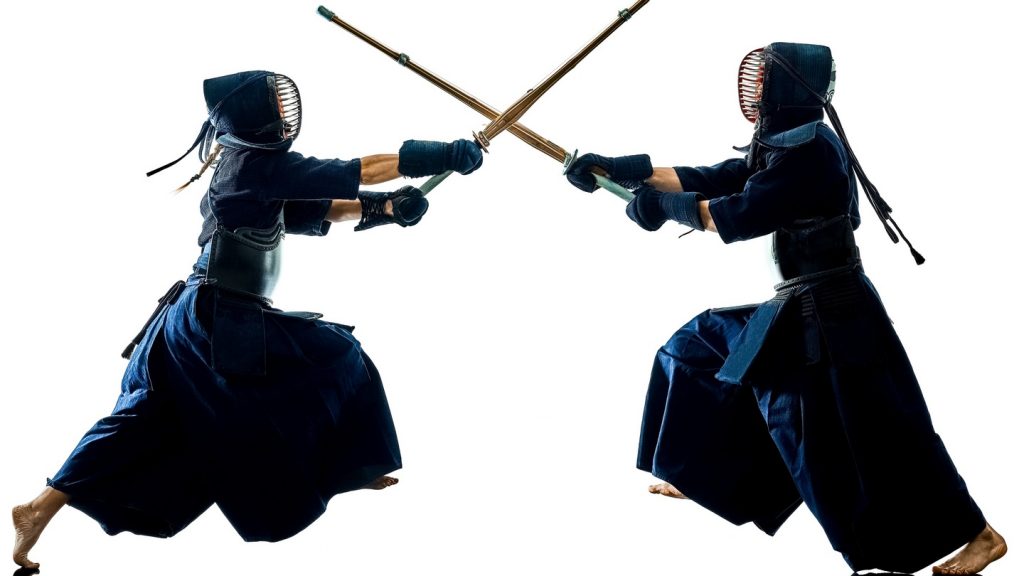
Kendo
If your goal is to learn martial arts for the sake of self-defense, then kendo is not for you.
Kendo is a Japanese sword-fighting art that grew out of samurai swordsmanship. You will not carry a sword in daily life, so its skills do not translate directly to self-defense.
Players wear protective armor and fight with bamboo swords. Unlike judo and most combat sports, kendo does not use weight classes, so competitors are not separated by size.
6. Krav Maga
Krav Maga is Hebrew for "contact combat." It was first taught to members of the Israeli military and later adapted for civilians.
Krav Maga is a self-defense system, not a sport. It teaches punching, kicking, and grappling with a focus on ending threats quickly and getting away safely.
Watch This!
7. Kung Fu
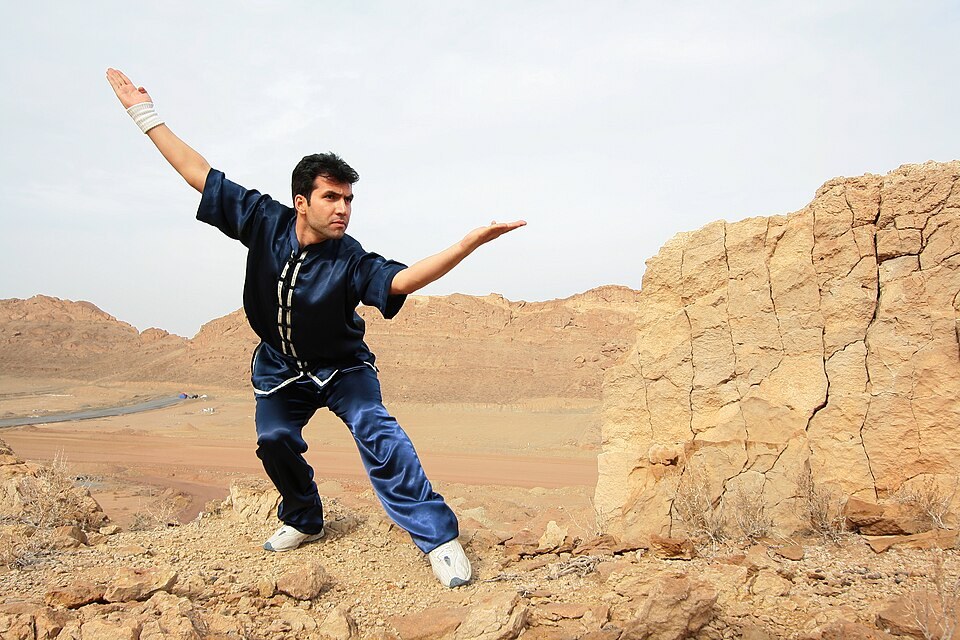
Photo by Mostafameraji, CC0, via Wikimedia Commons
Kung Fu
Kung fu is one of the best-known martial arts from China. Many schools teach values like humility, patience, and respect alongside fighting skills.
Kung fu is not a single style. It is an umbrella term for many traditional Chinese systems, including Wing Chun and Shaolin kung fu.
8. Karate
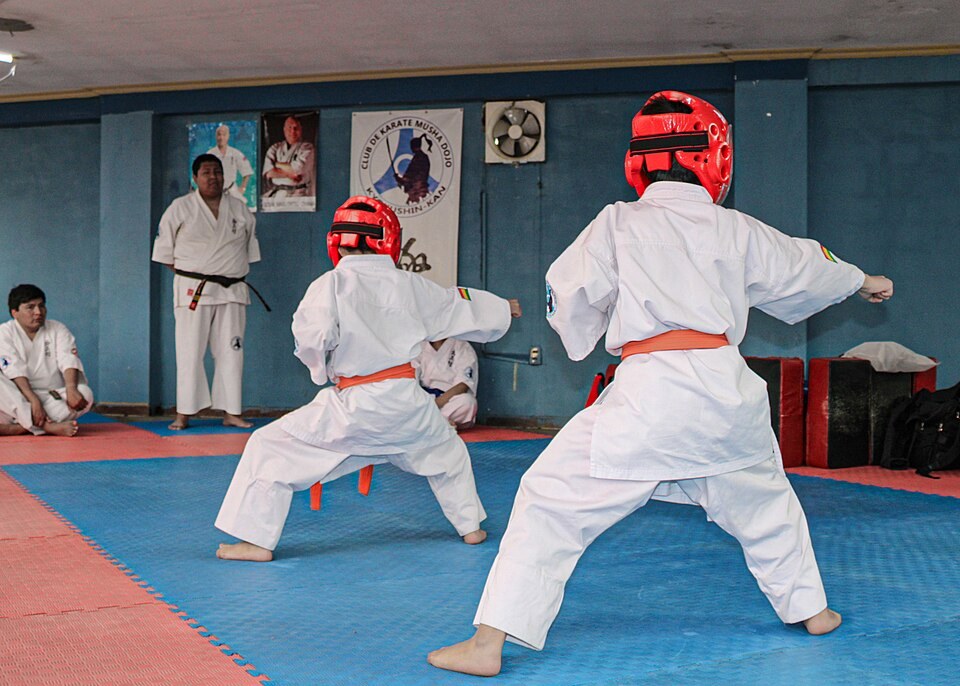
Photo by Norkiña, CC BY-SA 4.0, via Wikimedia Commons
Karate
Karate is one of the most popular martial arts in the world.
Kara means empty and te means hand, so karate translates to "empty hand." It is a striking art practiced without weapons.
Karate developed in Okinawa and spread through mainland Japan.
Training is divided into three parts. The first is kihon, which includes strikes, blocks, and kicks. The second is kata, which is the art form of karate targeted toward improving balance, agility, coordination, and speed. The last element is kumite or sparring.
9. Mixed Martial Arts

Photo by Haribhagirath, CC BY 4.0, via Wikimedia Commons
Mixed Martial Arts
As the name implies, MMA is not a single martial art. It combines different fighting methods, and it is the sport you see in the Ultimate Fighting Championship (UFC).
Mixed Martial Arts is a full-contact sport that is based on three key elements – striking, grappling, and ground fighting.
It includes different fighting styles, such as boxing, Brazilian jiu-jitsu, judo, karate, kickboxing, taekwondo, and wrestling.
Fun Fact: Get to know some of the better-known MMA combatants by researching short UFC fighters! You'd be surprised that height isn't all that matters with this full-contact sport.
10. Muay Thai
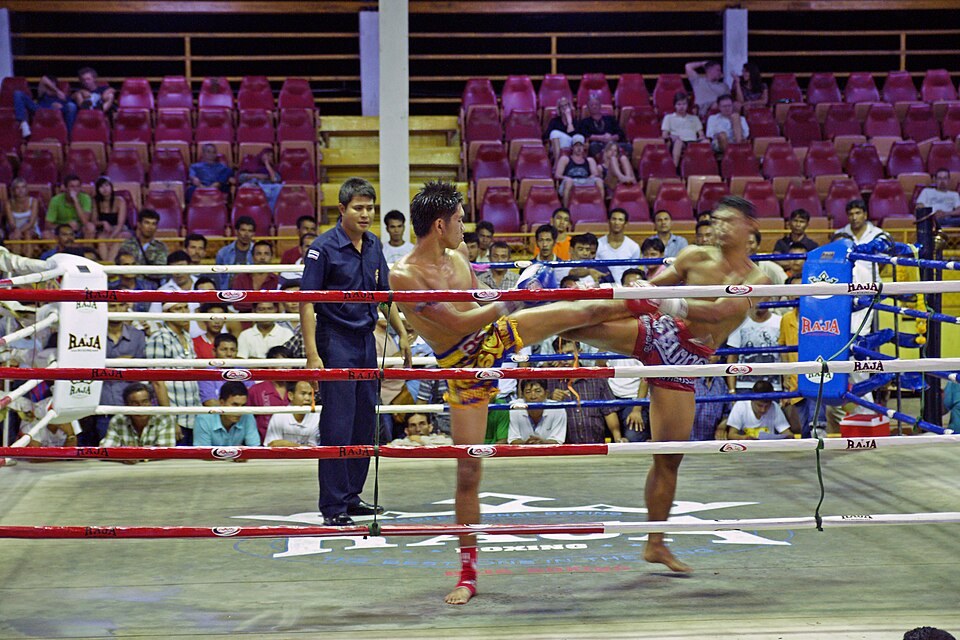
Photo by kallerna, CC BY-SA 3.0, via Wikimedia Commons
Muay Thai
Muay Thai is the national sport of Thailand and is called the art of eight limbs because it uses fists, elbows, knees, and shins.
It is a stand-up combat sport built on punches, kicks, knees, elbows, and clinch work.
Its popularity has spread worldwide, and many people travel to Thailand to train at its camps.
Fun Fact: Muay Thai is often compared with another martial arts form! You can learn about this by researching Muay Thai vs Boxing.
11. Sumo
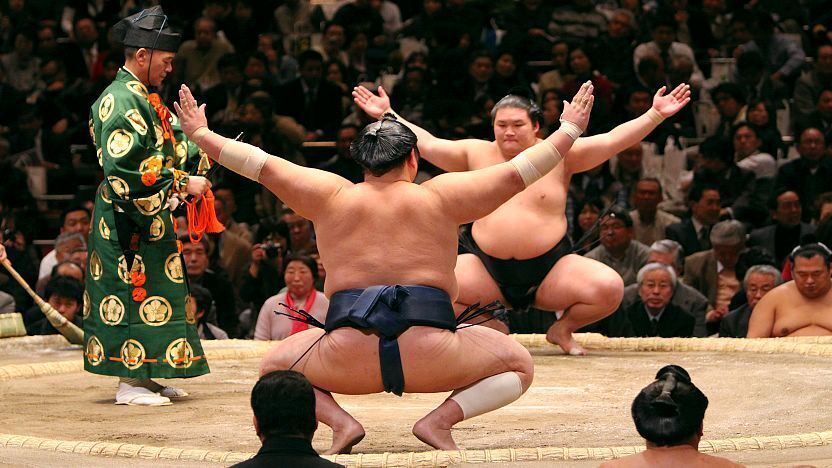
Sumo
Sumo is a form of unarmed wrestling that originated in Japan, where it is widely seen as the national sport.
The rule is simple: the first wrestler to touch the ground with any body part other than the soles of the feet, or to step out of the ring, loses.
Professional sumo has no weight classes, so anyone can face anyone. That is why many professional wrestlers deliberately build a large body mass.
12. Tae kwon do
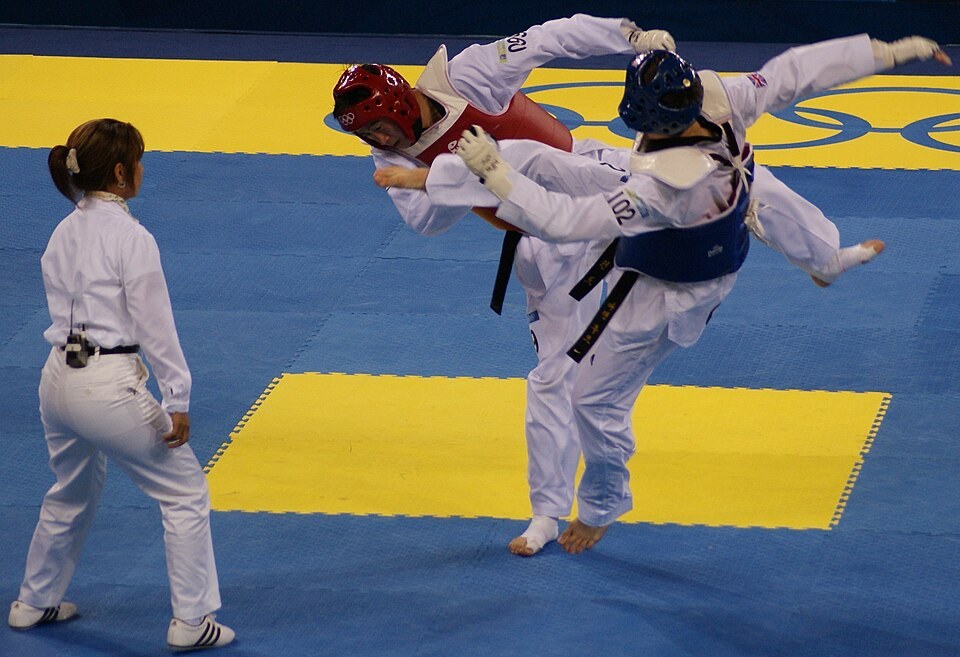
Photo by Luketkd, CC BY-SA 3.0, via Wikimedia Commons
Tae Kwon Do
Tae kwon do is a Korean martial art known for its fast, high kicks. It is also an Olympic sport.
Tae means foot, kwon means fist, and do means "the way."
Training also stresses discipline and self-control alongside kicking and punching.
13. Tai Chi
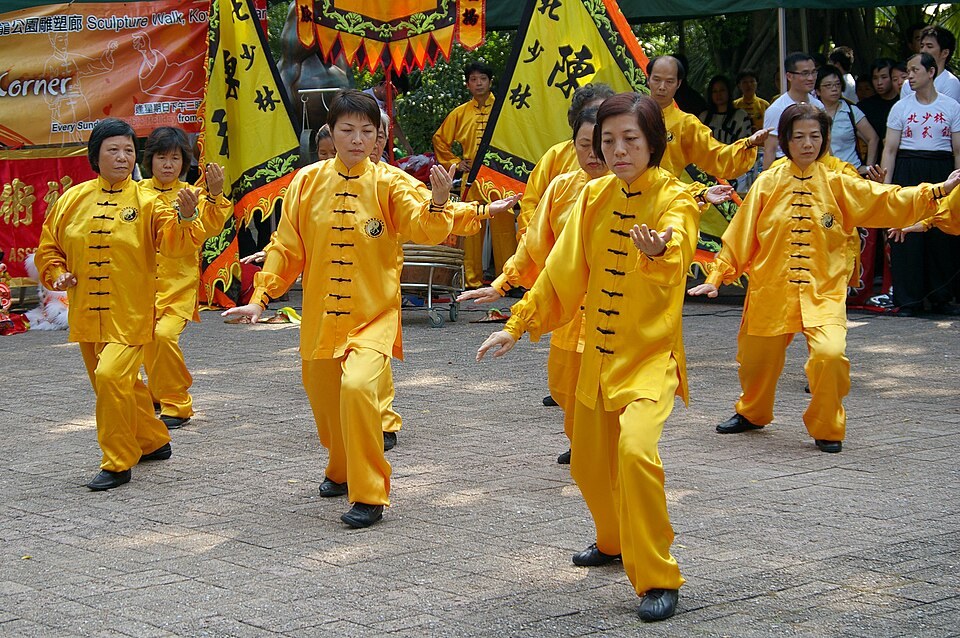
Photo by Jakub Hałun, CC BY-SA 4.0, via Wikimedia Commons
Tai Chi
Wrapping up this list is tai chi, a Chinese martial art now practiced mostly as slow, gentle exercise. It is often described as meditation in motion.
According to the NIH's National Center for Complementary and Integrative Health, tai chi appears to be safe and may help improve balance and reduce falls in older adults. Studies also suggest it may help with blood pressure and well-being, but much of that research is low quality.
Frequently Asked Questions
What is the first martial art in the world?
No one knows for sure, because fighting systems existed long before written records. Kalaripayattu, from Kerala in southern India, is often named as one of the oldest martial arts still practiced, though its exact age is debated.
Kalaripayattu combines body conditioning, stick fighting, sword fighting, and empty-hand techniques.
What are the deadliest martial arts?
Styles often called the most dangerous include silat, Muay Thai, and Krav Maga, because they train strikes and techniques meant to end a fight fast.
Krav Maga in particular skips sport rules and focuses on real threats, which is why it is often called deadly. In practice, how dangerous any style is depends on the person using it.
Conclusion
From karate to tae kwon do, there are many styles to choose from. Pick one that fits your goals, try a few classes, and look for a qualified instructor and a safe training environment.
Sources
- History, International Judo Federation
- Tai Chi: What You Need To Know, National Center for Complementary and Integrative Health (NIH)